


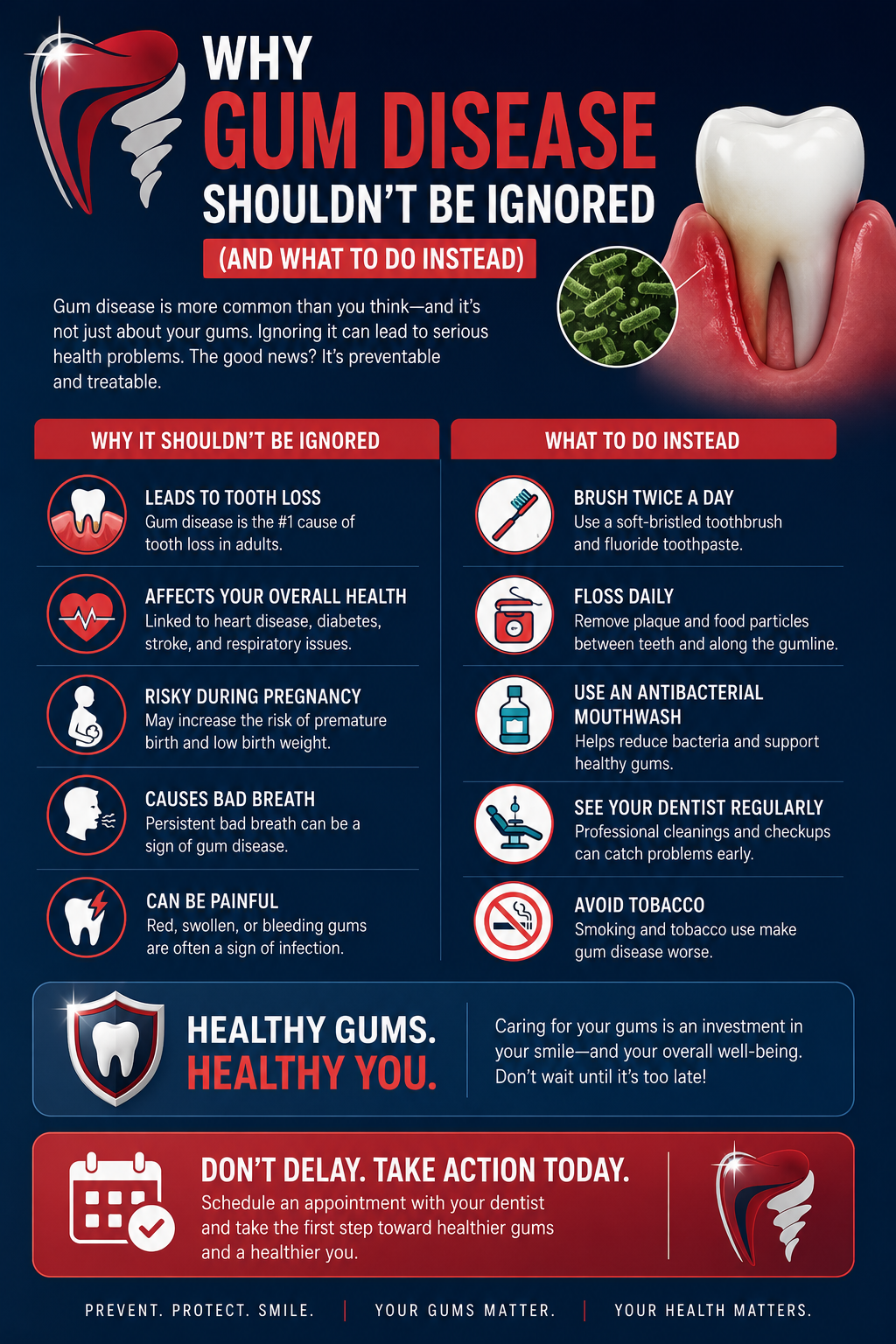
Is gum disease something you should be concerned about?
Yes, if you understand what it is and if you recognize certain symptoms.
Let's start with the basics.
What is gum disease?
The technical term you might hear from your dentist is periodontal disease. However it's referenced, the culprit is a common one.
Like most issues in your mouth the root cause can be traced to bacteria.
The early stages of gum disease (gingivitis) typically begin with a bacterial infection in your mouth. The infection could be sourced in a decayed tooth or within your gum tissue.
Major issues emerge when you ignore the infection. As bacteria begin to multiply and thrive (without treatment) your infection can worsen in its attack on your gum tissue.
Ignoring or avoiding a gum disease diagnosis and treatment can lead to further health complications.
• Jaw bone erosion
• Tooth loss
• Systemic health issues such as heart disease and diabetes.
Once you notice signs and symptoms of gum disease it's vital to seek dental care.
Swollen, red, tender, or infected gums
When your gums are healthy and minus infection they should appear firm and pink in color. Inflammation in your gum tissue can produce a swelled and/or red appearance.
You might also notice tenderness especially when chewing or brushing your teeth.
Bleeding gums
This symptom often shows up when you are brushing and flossing your teeth. Blood in the sink could be the result of aggressive brushing (gentleness recommended).
It's the frequent appearance of blood that requires attention. Consult with a dentist to seek a cause for bleeding gums - including gum disease.
Receding gums
You might notice that your teeth are pulling away from your gums. Or you could get the impression that your teeth are getting longer.
What's happening might be gum recession. This can result from weak or infected gum tissue.
Loose or misaligned teeth
Your gum and bone tissue provide an anchor for your teeth. When the tissue begins to break down due to infection or gum disease, your teeth can loosen.
You might also notice that your teeth do not fit together properly. Or that your bite is off.
Bad breath
Again, bacteria is to blame. Oral bacteria that are allowed to thrive in your mouth will often attack gum tissue and overtime produce gum disease.
This brings us to the big question...
How do you prevent and treat gum disease?
There are care routines that can help prevent gum disease from occuring. And there are treatments for gum disease once you've been diagnosed - even early stage solutions for reversing gum disease.
Daily oral hygiene routines
• Brush your teeth a minimum of two times per day.
• Use a toothpaste containing fluoride.
• Floss between your teeth and gently around you gum tissue to remove plaque.
Take advantage of gum disease treatment following a diagnosis
Gingivitis is an early stage condition. The good news is that some cases of gingivitis can be reversed with specific treatment.
Treatment for early and advanced stages of gum disease can include:
• A deep cleaning (scaling and root planing procedure). Your dentist or a dental hygienist uses laser or ultrasonic technology or manual tools to remove tartar and bacteria from beneath your gum tissue.
• Prescribed medications that help control bacteria, infection, and also relieve gum disease symptoms.
• Surgical treatments for more severe and advanced conditions.
Gum disease symptoms can create a number of questions. It's essential to your oral health that you seek answers and solutions for your gum related issues.